
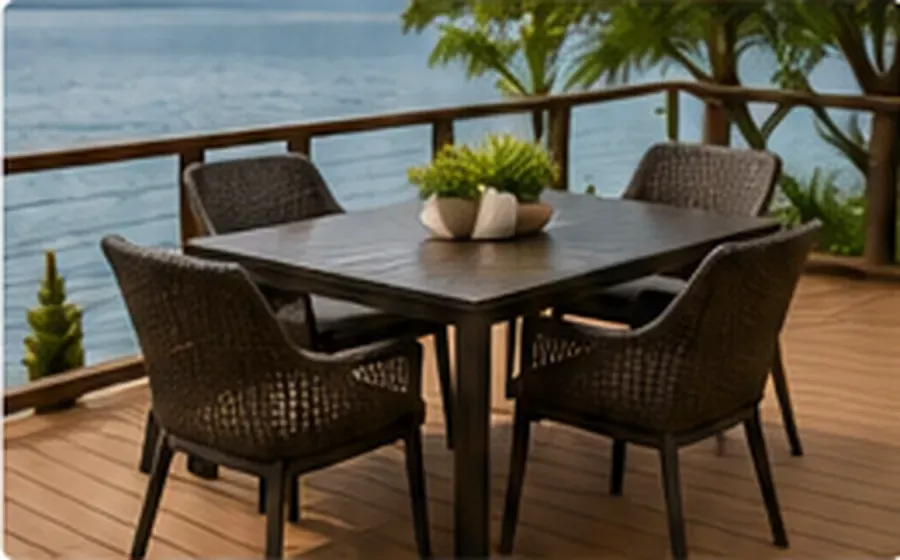
Choose the main purpose first
A large dining table may be ideal for regular meals but wasteful for a household that mostly drinks coffee outdoors. A deep sectional can be comfortable yet difficult to rearrange. Decide whether the patio is mainly for meals, conversation, lounging, flexible gatherings, or several smaller zones.
Work with the surface
Stone, concrete, pavers, tile, and composite surfaces heat differently and may not be perfectly level. Check that chair and table feet sit securely. Use glides that suit the surface and avoid metal edges that can scratch coatings or trap rust marks.
Build shade into the furniture plan
An umbrella base, pergola post, or retractable-awning path consumes real space. Plan shade before finalising furniture positions. A movable side table can sometimes be more useful than a large coffee table when shade shifts during the day.
Keep flexibility where it helps
Stacking chairs, nesting tables, benches, and lightweight accent seats can make a small patio adapt to visitors. Flexibility is useful only when there is a realistic place to store moved pieces.